January 4

9 moments in history

Battle of Ruspina — Caesar fights for survival in Africa
Image details ↗
Ruspina, North AfricaAncient
46 BC

Battle of Ruspina

Caesar fights for survival in Africa

On the sun-scorched plains of North Africa, Julius Caesar found himself in desperate peril. Near the town of Ruspina in modern-day Tunisia, his outnumbered forces clashed with the army of his former ally Titus Labienus. Though nearly overwhelmed by superior cavalry, Caesar's tactical genius and his soldiers' iron discipline turned near-disaster into survival. The battle was a brutal prelude to his ultimate triumph in the African campaign.
The Real James Bond — An ornithologist lends his name to legend
Image details ↗
Philadelphia, United StatesEarly 20th Century
1900

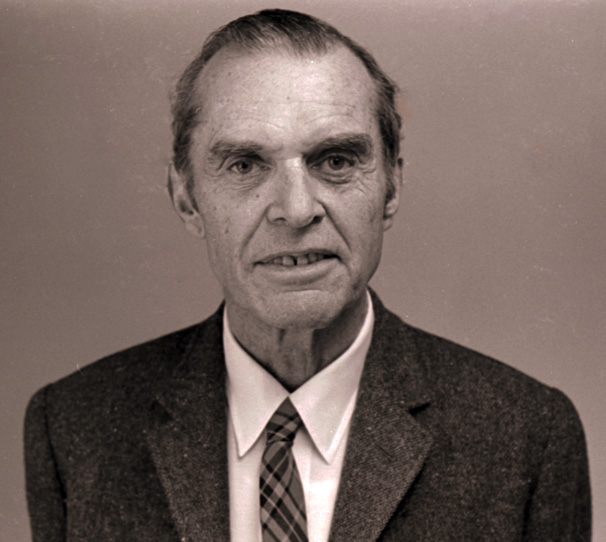
The Real James Bond

An ornithologist lends his name to legend

James Bond was born in Philadelphia, destined not for espionage but for the study of Caribbean birds. As an ornithologist at the Academy of Natural Sciences, he wrote the definitive guide to West Indian birdlife. When Ian Fleming, searching for the dullest possible name for his fictional spy, spotted Bond's book on a shelf in Jamaica, he borrowed the name, inadvertently granting an American scientist a peculiar kind of immortality.

Sputnik 1 — Sputnik 1, the first artificial Earth satellite, launched by the Soviet Union in 1957, falls to Earth from orbit.
Image details ↗
First artificial Earth satelliteLate 20th Century
1958

Sputnik 1

Sputnik 1, the first artificial Earth satellite, launched by the Soviet Union in 1957, falls to Earth from orbit.

Sputnik 1, often referred to as simply Sputnik, was the first artificial Earth satellite. It was launched into an elliptical low Earth orbit by the Soviet Union on 4 October 1957 as part of the Soviet space program. It sent a radio signal back to Earth for three weeks before its three silver-zinc batteries became depleted. Aerodynamic drag caused it to fall back into the atmosphere on 4 January 1958.

Luna 1 — Luna 1 becomes the first spacecraft to reach the vicinity of the Moon.
Image details ↗
Soviet spacecraftLate 20th Century
1959

Luna 1

Luna 1 becomes the first spacecraft to reach the vicinity of the Moon.

Luna 1, also known as Mechta, E-1 No.4 and First Lunar Rover, was the first spacecraft to reach the vicinity of Earth's Moon, the first spacecraft to leave Earth's orbit, and the first to be placed in heliocentric orbit. Intended as a Moon impactor, Luna 1 was launched as part of the Soviet Luna programme in 1959.

Last of the Summer Wine — Last of the Summer Wine, the longest-running sitcom in the world, premiered as an episode of the BBC's Comedy Playhouse.
Image details ↗
British TV sitcom (1973–2010)Late 20th Century
1973

Last of the Summer Wine

Last of the Summer Wine, the longest-running sitcom in the world, premiered as an episode of the BBC's Comedy Playhouse.

Last of the Summer Wine is a British sitcom set in Yorkshire created and written by Roy Clarke and originally broadcast by the BBC from 1973 to 2010. It premiered as an episode of Comedy Playhouse on 4 January 1973, and the first series of episodes followed on 12 November 1973. Alan J. W. Bell produced and directed all episodes of the show from late 1981 to 2010.

Grumman F-14 Tomcat — Two American F-14 Tomcats shot down two Libyan MiG-23 Floggers that appeared to be attempting to engage them over the Gulf of Sidra.
Image details ↗
Carrier-based multi-role fighter aircraft familyLate 20th Century
1989

Grumman F-14 Tomcat

Two American F-14 Tomcats shot down two Libyan MiG-23 Floggers that appeared to be attempting to engage them over the Gulf of Sidra.

The Grumman F-14 Tomcat is an American carrier-capable supersonic, twin-engine, tandem two-seat, twin-tail, all-weather-capable variable-sweep wing fighter aircraft. The Tomcat was developed for the United States Navy's Naval Fighter Experimental (VFX) program after the collapse of the General Dynamics-Grumman F-111B project. A large and well-equipped fighter, the F-14 was the first of the American Teen Series fighters, which were designed incorporating air combat experience against smaller, more maneuverable MiG fighters during the Vietnam War.

Asta Train Disaster — Two trains collide in the Norwegian winter
Image details ↗
Amot, Norway21st Century
2000

Asta Train Disaster

Two trains collide in the Norwegian winter

In the frozen heart of Norway, a passenger train departing Trondheim collided head-on with a local train near Asta in Amot Municipality. The impact killed nineteen people and injured sixty-eight, sending shockwaves through a nation unaccustomed to such tragedy. The disaster prompted sweeping reforms in Norwegian rail safety and became a solemn reminder of the fragility of human life in the mechanized modern world.

Spirit — Spirit, a NASA Mars rover, lands successfully on Mars at 04:35 UTC.
Image details ↗
Former NASA Mars rover, active from 2004 to 201021st Century
2004

Spirit

Spirit, a NASA Mars rover, lands successfully on Mars at 04:35 UTC.

Spirit, also known as MER-A or MER-2, is a Mars robotic rover, active from 2004 to 2010. Spirit was operational on Mars for 2208 sols or 3.3 Martian years. It was one of two rovers of NASA's Mars Exploration Rover Mission managed by the Jet Propulsion Laboratory (JPL).

110th United States Congress — The 110th United States Congress convenes, electing Nancy Pelosi as the first female Speaker of the House in U.
Image details ↗
2007–2009 U.S. legislative term21st Century
2007

110th United States Congress

The 110th United States Congress convenes, electing Nancy Pelosi as the first female Speaker of the House in U.

The 110th United States Congress was a meeting of the legislative branch of the United States federal government, between January 3, 2007, and January 3, 2009, during the last two years of the Presidency of George W. Bush. It was composed of the Senate and the House of Representatives. The apportionment of seats in the House was based on the 2000 U.S. census.