January 27

10 moments in history

Trajan Becomes Emperor — Rome's greatest conqueror takes the throne
Image details ↗
Cologne, Roman EmpireClassical
98

Trajan Becomes Emperor

Rome's greatest conqueror takes the throne

Upon the death of his adoptive father Nerva, Trajan ascended to the throne of the Roman Empire. Under his rule, the empire would reach its maximum territorial extent, stretching from the misty shores of Britain to the sunbaked deserts of Mesopotamia. Trajan's military conquests, monumental building projects, and generous social programs earned him the Senate's honorific as Optimus Princeps, the best of rulers, a title that endured long after his death.

Hyman Rickover Was Born — The father of the nuclear navy arrives
Image details ↗
Makow Mazowiecki, PolandEarly 20th Century
1900

Hyman Rickover Was Born

The father of the nuclear navy arrives

Hyman George Rickover was born in what is now Poland, a future admiral who would revolutionize naval warfare. Emigrating to America as a child, he rose through the ranks of the U.S. Navy to become the driving force behind nuclear-powered submarines and ships. His relentless pursuit of excellence and safety created a naval nuclear program that remains unmatched. Rickover's legacy includes two Congressional Gold Medals and the world's first commercial nuclear power plant.

Cold War — Cold War: The Soviet Union, the United States, and the United Kingdom sign the Outer Space Treaty in Washington, D.
Image details ↗
1947–1991 geopolitical rivalry between US and USSRLate 20th Century
1967

Cold War

Cold War: The Soviet Union, the United States, and the United Kingdom sign the Outer Space Treaty in Washington, D.

The Cold War was a period of international geopolitical rivalry between the United States (US) and the Soviet Union (USSR) and their respective allies, the capitalist Western Bloc and communist Eastern Bloc, which began in the aftermath of the Second World War and ended with the dissolution of the Soviet Union in 1991.

Paris Peace Accords — The Paris Peace Accords officially ends the Vietnam War.
Image details ↗
Late 20th Century
1973

Paris Peace Accords

The Paris Peace Accords officially ends the Vietnam War.

The Paris Peace Accords officially ends the Vietnam War. Colonel William Nolde is killed in action becoming the conflict's last recorded American combat casualty.

Iran hostage crisis — Six American diplomats who had evaded capture in the Iran hostage crisis escaped with the help of Canadian government.
Image details ↗
Occupation of Tehran's U.S. embassy (1979–1981)Late 20th Century
1980

Iran hostage crisis

Six American diplomats who had evaded capture in the Iran hostage crisis escaped with the help of Canadian government.

The Iran hostage crisis began on November 4, 1979, when 66 Americans, including diplomats and other civilian personnel, were taken hostage at the Embassy of the United States in Tehran, with 52 of them being held until January 20, 1981. The incident occurred after the Muslim Student Followers of the Imam's Line stormed and occupied the building in the months following the Iranian Revolution.

Mahamane Ousmane — Mahamane Ousmane, the first democratically elected president of Niger, was deposed by Colonel Ibrahim Baré Maïnassara in a military coup d'état.
Image details ↗
President of Niger from 1993 to 1996Late 20th Century
1996

Mahamane Ousmane

Mahamane Ousmane, the first democratically elected president of Niger, was deposed by Colonel Ibrahim Baré Maïnassara in a military coup d'état.

Mahamane Ousmane is a Nigerien politician. Elected as the fourth President of Niger at 43 years old, he is the youngest elected president in Africa. He was also the first democratically elected president of his country, serving from 16 April 1993 until he was deposed in a military coup d'état on 27 January 1996.

Morgan Gibbs-White Born — Nottingham Forest finds a future star
Image details ↗
Stafford, England21st Century
2000

Morgan Gibbs-White Born

Nottingham Forest finds a future star

Morgan Anthony Gibbs-White was born in England, a future attacking midfielder who would light up the Premier League. Developing through Wolverhampton Wanderers' academy, Gibbs-White honed his craft before becoming a cornerstone of Nottingham Forest's return to top-flight football. His creativity, work rate, and eye for goal made him a fan favorite and a key part of Forest's ambitions to reestablish themselves among English football's elite.

National Recording Registry — The first selections for the National Recording Registry are announced by the Library of Congress.
Image details ↗
21st Century
2003

National Recording Registry

The first selections for the National Recording Registry are announced by the Library of Congress.

Porfirio Lobo Sosa — Porfirio Lobo Sosa became the new president of Honduras, ending a constitutional crisis that had begun in 2009 when.
Image details ↗
37th President of Honduras (2010–2014)21st Century
2010

Porfirio Lobo Sosa

Porfirio Lobo Sosa became the new president of Honduras, ending a constitutional crisis that had begun in 2009 when.

Porfirio Lobo Sosa also known by his nickname, Pepe Lobo, is a Honduran former politician, business administrator, and agricultural landowner who served as 37th President of Honduras from 27 January 2010 to 27 January 2014. A member of the conservative National Party and a former deputy in the National Congress of Honduras from 25 January 1990, he was president of the National Congress of Honduras from 25 January 2002 to 25 January 2006.

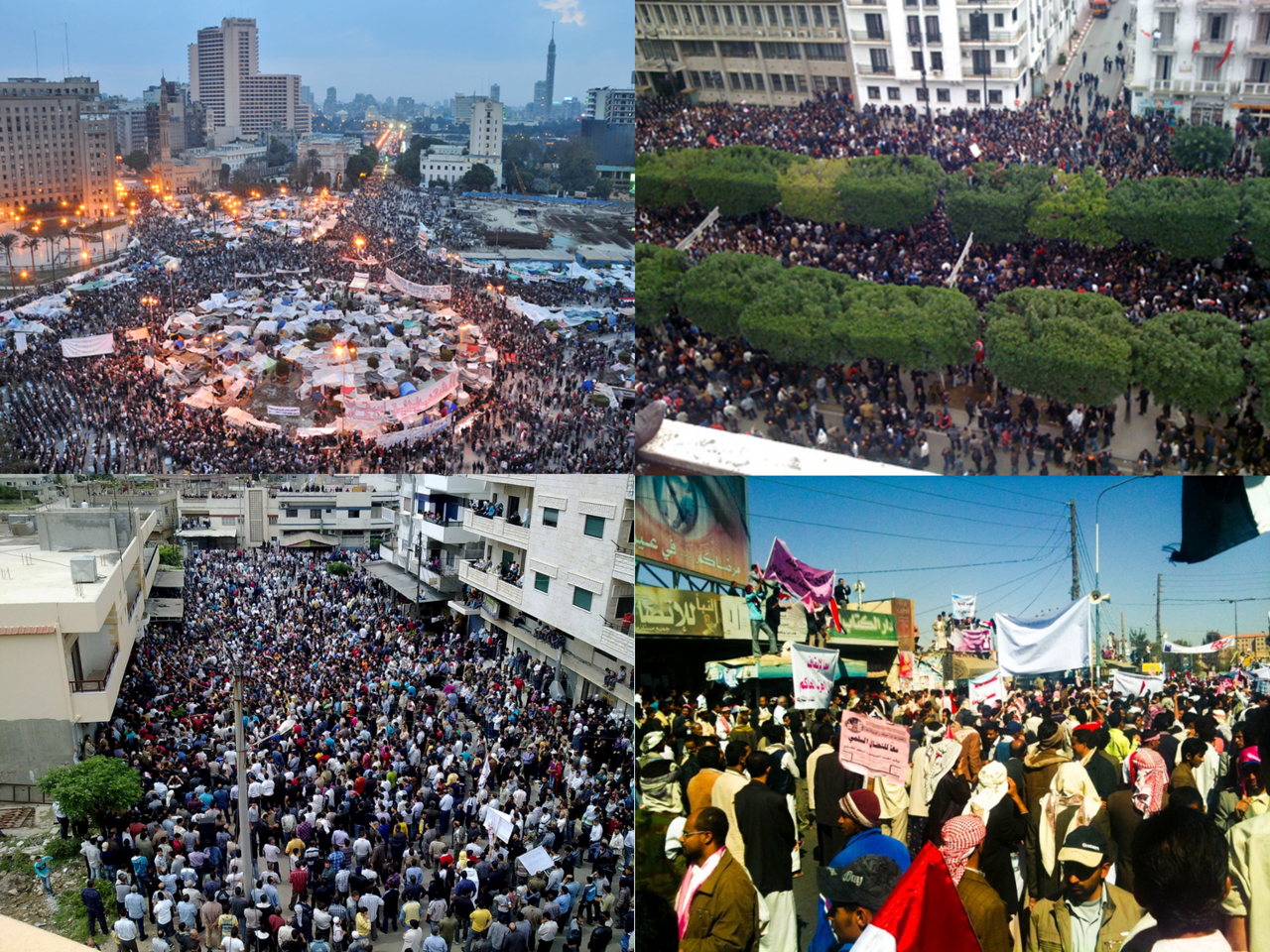
Arab Spring — Arab Spring: The Yemeni Revolution began as more than 16,000 protesters demonstrated in Sanaa to demand governmental changes.
Image details ↗
2010s protests and revolutions in the Arab world21st Century
2011

Arab Spring

Arab Spring: The Yemeni Revolution began as more than 16,000 protesters demonstrated in Sanaa to demand governmental changes.

The Arab Spring was a series of pro-democracy anti-government protests, uprisings, and armed rebellions that spread across much of the Arab world in the early 2010s. It began in Tunisia in response to the death of Mohamed Bouazizi by self-immolation. From Tunisia, the protests initially spread to five other countries: Libya, Egypt, Yemen, Syria and Bahrain.