January 24

10 moments in history

Caligula Assassinated — The Praetorian Guard murders its own emperor
Image details ↗
Rome, Roman EmpireClassical
41

Caligula Assassinated

The Praetorian Guard murders its own emperor

In the underground corridors beneath Rome's Palatine Hill, members of the Praetorian Guard cornered Emperor Caligula and struck him down with their swords. The assassination, led by the officer Cassius Chaerea, ended a reign of terror marked by cruelty, excess, and madness. As Caligula's blood pooled on the palace floor, the guards proclaimed his uncle Claudius the new emperor, plucked from hiding behind a curtain to ascend the throne of the world.

Siege of Ladysmith Holds — Boers block Britain at Spion Kop
Image details ↗
Ladysmith, South AfricaEarly 20th Century
1900

Siege of Ladysmith Holds

Boers block Britain at Spion Kop

The Boer forces successfully repelled a British attempt to break the siege of Ladysmith during the Battle of Spion Kop. The besieged British garrison, running low on supplies and morale, watched helplessly as their relief column was turned back. The failed assault demonstrated the Boers' formidable defensive capabilities and the limitations of British imperial tactics in the rugged terrain of southern Africa.

Boeing B-52 Stratofortress — A Boeing B-52 Stratofortress carrying two Mark 39 nuclear weapons broke up in mid-air near Goldsboro, North Carolina.
Image details ↗
American strategic bomber aircraftLate 20th Century
1961

Boeing B-52 Stratofortress

A Boeing B-52 Stratofortress carrying two Mark 39 nuclear weapons broke up in mid-air near Goldsboro, North Carolina.

The Boeing B-52 Stratofortress is an American subsonic jet-powered strategic bomber. The B-52 was designed and built by Boeing, which has continued to provide support and upgrades. It has been operated by the United States Air Force (USAF) since 1955 and was flown by NASA from 1959 to 2007. The bomber can carry up to 70,000 pounds (32,000 kg) of weapons and has a typical combat range of around 8,800 miles (14,200 km) without aerial refueling.

Vietnam War — Vietnam War: The 1st Australian Task Force launches Operation Coburg against the North Vietnamese Army and Viet Cong.
Image details ↗
War in Southeast Asia from 1955 to 1975Late 20th Century
1968

Vietnam War

Vietnam War: The 1st Australian Task Force launches Operation Coburg against the North Vietnamese Army and Viet Cong.

The Vietnam War was an armed conflict in Vietnam, Laos, and Cambodia fought between North Vietnam and South Vietnam and their allies. North Vietnam was supported by the Soviet Union and China, while South Vietnam was supported by the United States and other anti-communist nations. The conflict was the second of the Indochina wars and a proxy war of the Cold War between the Soviet Union and US.

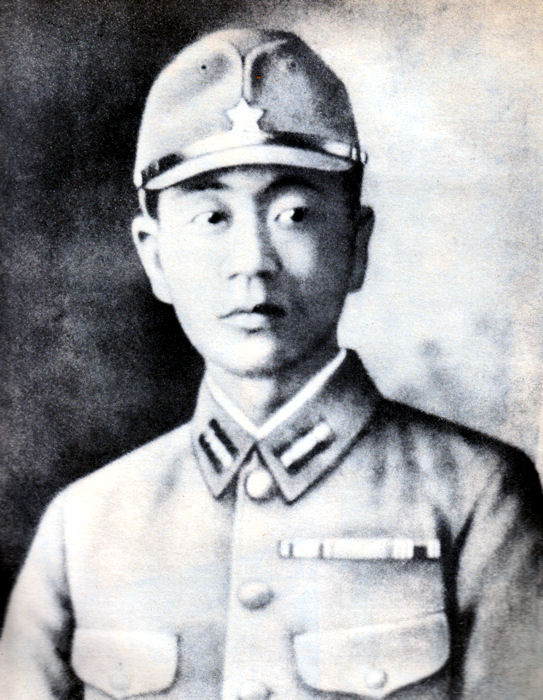
Shoichi Yokoi — Japanese soldier Shoichi Yokoi was found in the jungles of Guam, where he had been hiding since the end of World War II.
Image details ↗
Japanese World War II holdout (1915–1997)Late 20th Century
1972

Shoichi Yokoi

Japanese soldier Shoichi Yokoi was found in the jungles of Guam, where he had been hiding since the end of World War II.

Shōichi Yokoi was a Japanese soldier who served as a sergeant in the Imperial Japanese Army (IJA) during the Second World War and was one of the last three Japanese holdouts to be found after the end of hostilities in 1945. He was discovered in the jungles of Guam on 24 January 1972, almost 28 years after U.S. forces had regained control of the island in 1944.

1977 Atocha massacre — The Atocha massacre occurs in Madrid during the Spanish transition to democracy.
Image details ↗
Far-right attack in Madrid, SpainLate 20th Century
1977

1977 Atocha massacre

The Atocha massacre occurs in Madrid during the Spanish transition to democracy.

The 1977 Atocha massacre was an attack by right-wing extremists in the center of Madrid on 24 January 1977, which saw the assassination of five labor activists from the Communist Party of Spain (PCE) and the workers' federation Comisiones Obreras (CC.OO). The act occurred within the wider context of far-right reaction to Spain's transition to constitutional democracy following the death of dictator Francisco Franco.

Soviet Union — Soviet satellite Kosmos 954, with a nuclear reactor on board, burns up in Earth's atmosphere, scattering radioactive.
Image details ↗
Country in Eurasia (1922–1991)Late 20th Century
1978

Soviet Union

Soviet satellite Kosmos 954, with a nuclear reactor on board, burns up in Earth's atmosphere, scattering radioactive.

The Union of Soviet Socialist Republics (USSR), also known as the Soviet Union, was a transcontinental country that spanned much of Eurasia from 1922 until its dissolution in 1991. It was the world's third-most populous country, largest by area, and bordered twelve countries. A diverse multinational state, it was organized as a federal union of national republics, the largest and most populous being the Russian Soviet Federative Socialist Republic. In practice, its government and economy were highly centralized.

Voyager 2 — The Voyager 2 space probe makes its closest approach to Uranus.
Image details ↗
NASA space probe launched in 1977Late 20th Century
1986

Voyager 2

The Voyager 2 space probe makes its closest approach to Uranus.

Voyager 2 is a space probe launched by NASA on August 20, 1977, as a part of the Voyager program. It was launched on a trajectory towards the gas giants and enabled further encounters with the ice giants. The only spacecraft to have visited either of the ice giant planets, it was the third of five spacecraft to achieve Solar escape velocity, which allowed it to leave the Solar System.

Hiten — Japan launches Hiten, the country's first lunar probe, the first robotic lunar probe since the Soviet Union's Luna 24.
Image details ↗
1990 Japanese lunar probeLate 20th Century
1990

Hiten

Japan launches Hiten, the country's first lunar probe, the first robotic lunar probe since the Soviet Union's Luna 24.

The Hiten spacecraft, given the English name Celestial Maiden and known before launch as MUSES-A, part of the MUSES Program, was built by the Institute of Space and Astronautical Science of Japan and launched on January 24, 1990. It was Japan's first lunar probe, the first robotic lunar probe since the Soviet Union's Luna 24 in 1976, and the first lunar probe launched by a country other than the Soviet Union or the United States.

Homeland Security Begins — America's new guardian opens its doors
Image details ↗
Washington, D.C., United States21st Century
2003

Homeland Security Begins

America's new guardian opens its doors

In the wake of the September 11 attacks, the United States Department of Homeland Security officially began operations, the largest reorganization of the federal government in half a century. The new department consolidated twenty-two agencies under a single mission: protecting the American homeland from terrorism. Its creation signaled a fundamental shift in how the nation approached security, trading some civil liberties for the promise of safety.